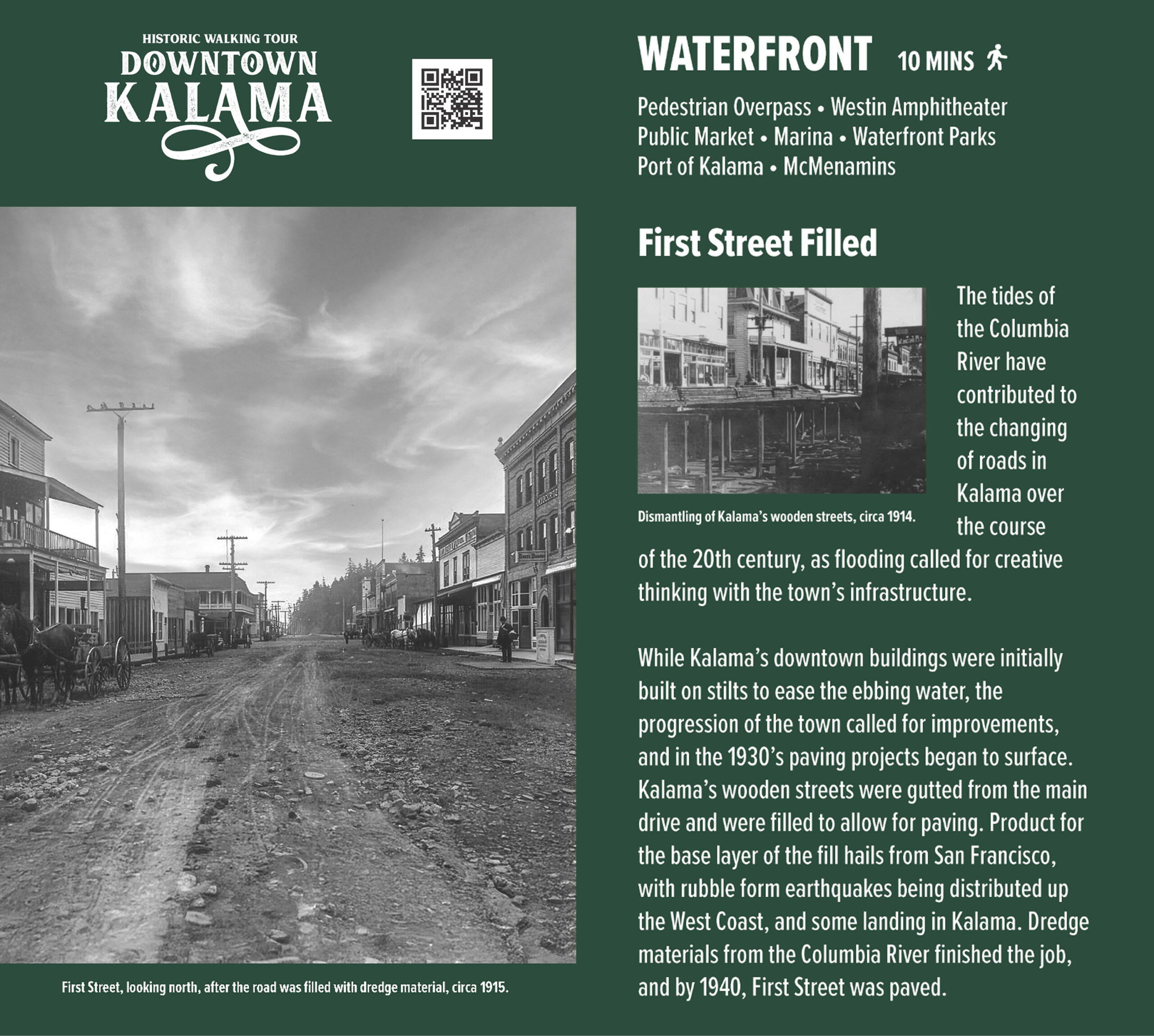
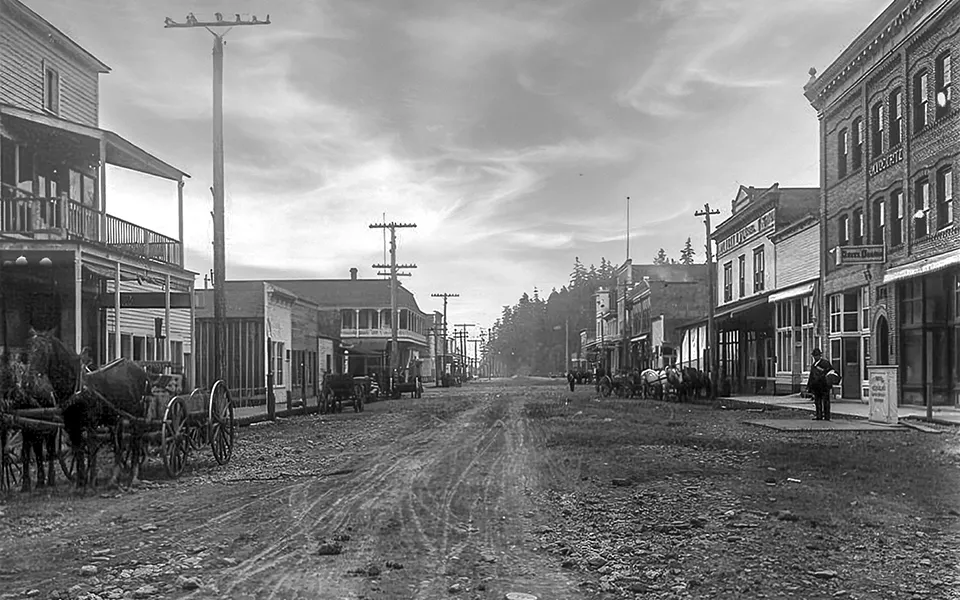
First Street Filled
Situated at the confluence of rail and water, the small-town triumph of Kalama is deeply intertwined with the Columbia River, which has not only nourished the community but has also posed challenges through seasonal flooding and shifting tides. To adapt to these natural fluctuations, the original downtown structures were built on stilts, allowing them to withstand the rising waters. However, as the town’s population and economic activities expanded, significant upgrades to the infrastructure became essential. The wooden streets of Kalama, once prominent in the main thoroughfares, were eventually removed and filled in to facilitate future growth. Notably, ships that docked to load lumber frequently left behind ballast, which included debris from the 1906 San Francisco earthquake that had been transported along the West Coast, forming a foundational layer for the fill. By around 1915, dredging activities in the Columbia River provided further materials to even out the streets, leading to paving initiatives in the 1930s that notably transformed First and Elm Streets, culminating in the complete paving of First Street by 1940.